Table of Contents


What is GitOps?
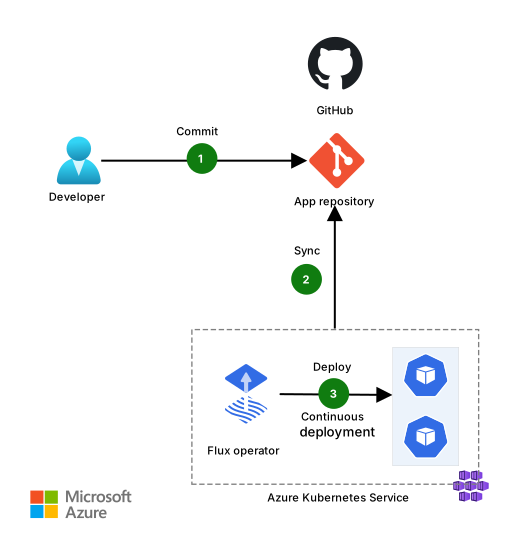
GitOps is an operational framework that uses Git as the single source of truth for infrastructure and application deployments. Instead of manually applying changes to servers or Kubernetes clusters, teams commit changes to a Git repository. Automated agents detect those changes and apply them to the infrastructure.
In simple terms:
Git repository = Desired state
Cluster = Actual state
GitOps tool = Reconciler that makes actual state match desired state
This approach builds on Infrastructure as Code principles and enhances CI CD pipelines with automated reconciliation.
Core Principles of GitOps
- Declarative infrastructure
All configurations are written declaratively, usually in YAML. - Version controlled system
Every change is tracked through Git commits. - Automated deployment
GitOps tools automatically apply changes. - Continuous reconciliation
The system constantly checks and corrects drift.
Why GitOps is Dominating in 2026
Cloud environments are more complex than ever. Multi cloud, hybrid cloud, microservices, and Kubernetes at scale require safer deployment strategies.
GitOps helps because:
- Rollbacks are easy using Git revert
- Auditing is simple through commit history
- Security improves with pull request approvals
- No direct kubectl access required
- Faster disaster recovery
For enterprises moving toward platform engineering, GitOps has become a default model.
GitOps Architecture Explained


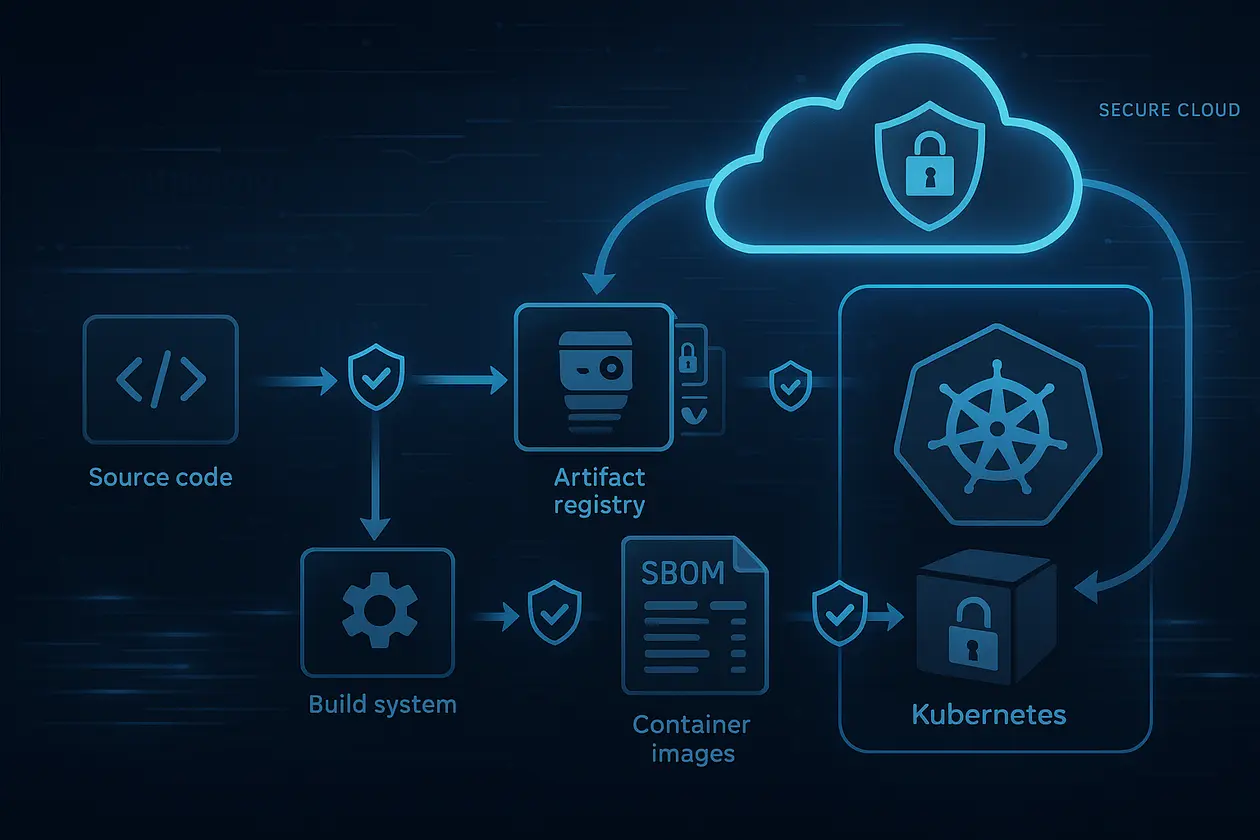
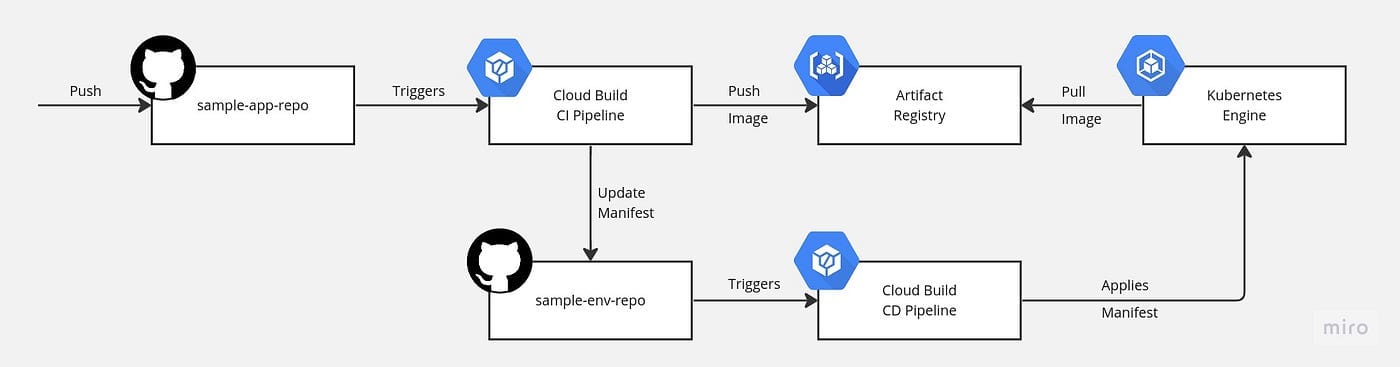
A typical GitOps architecture includes:
- Developer commits code
- CI pipeline builds container image
- Image tag updated in Git
- GitOps controller detects change
- Kubernetes cluster is updated automatically
There are two common models:
Pull based model
The cluster pulls changes from Git using agents.
Push based model
CI pipeline pushes changes to the cluster.
Most modern implementations prefer pull based architecture for security reasons.
Popular GitOps Tools in 2026
1. Argo CD
- Kubernetes native
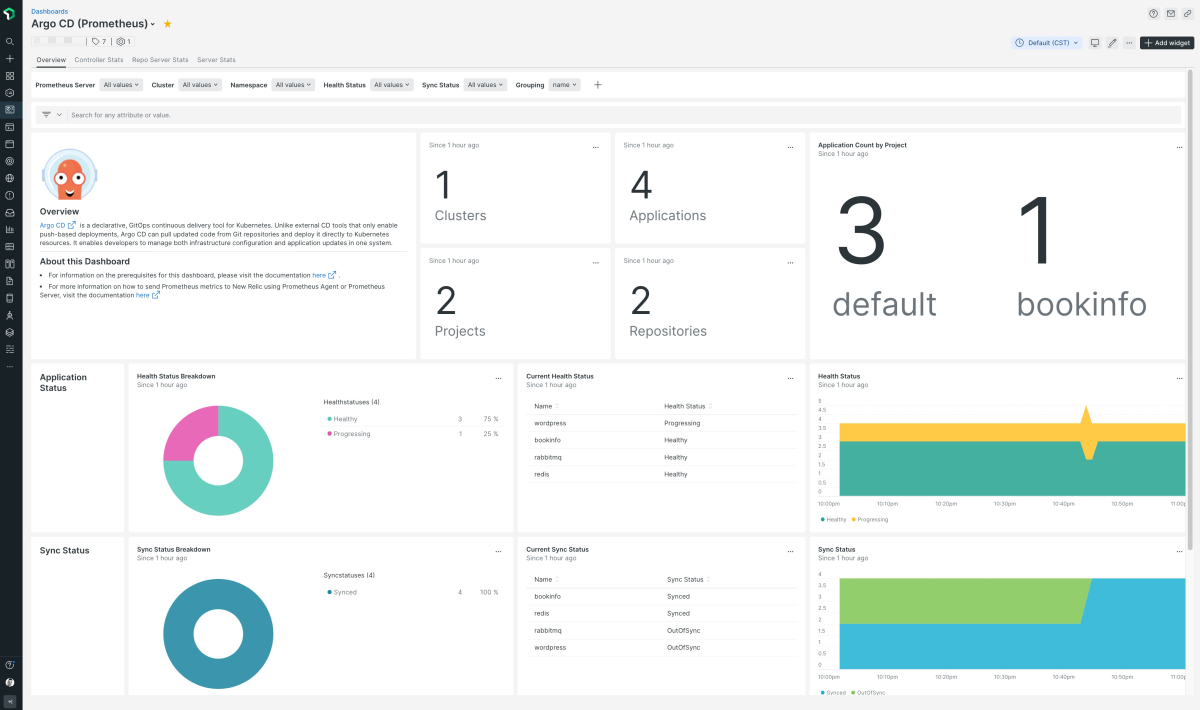
- Visual dashboard
- Advanced sync strategies
- Multi cluster support
Best for enterprise Kubernetes environments.
2. Flux CD
- Lightweight
- CNCF graduated project
- Strong integration with Helm and Kustomize
Ideal for cloud native teams.
3. GitHub Actions
Often integrated with GitOps pipelines for build and deployment automation.
GitOps vs Traditional CI CD
| Feature | Traditional CI CD | GitOps |
|---|---|---|
| Source of truth | CI system | Git repository |
| Rollback | Manual process | Git revert |
| Security | Direct cluster access | No direct access |
| Drift detection | Limited | Continuous reconciliation |
GitOps complements CI CD rather than replacing it.
Step by Step GitOps Implementation
Step 1: Containerize your application
Step 2: Push image to container registry
Step 3: Create Kubernetes manifests
Step 4: Store manifests in Git repository
Step 5: Install Argo CD or Flux
Step 6: Connect Git repository to cluster
Step 7: Enable auto sync
Now every commit automatically deploys your application.
Real World Example
Suppose you update replicas from 2 to 4 in deployment.yaml.
Instead of running kubectl scale:
- You modify YAML
- Commit changes
- Create pull request
- After approval, merge
- GitOps tool applies change automatically
This ensures governance and compliance.
Security Benefits of GitOps
- RBAC through Git access
- No production cluster credentials shared
- Immutable audit logs
- Faster incident investigation
- Automated drift correction
For banks, fintech, and regulated industries, GitOps significantly improves compliance posture.
Common Challenges
- Repository structure complexity
- Managing secrets securely
- Large monorepo performance
- Learning curve for teams
These can be solved with proper repository design and tools like sealed secrets or external secret managers.
GitOps Best Practices
- Separate application and environment repos
- Use branch protection rules
- Enable automated testing before merge
- Monitor reconciliation logs
- Implement proper secret management
- Use progressive delivery strategies
Future of GitOps in 2026 and Beyond
- Integration with AI driven change validation
- Policy as Code integration
- Multi cluster fleet management
- Platform engineering adoption
- Zero trust infrastructure models
GitOps is no longer optional for modern DevOps teams. It is becoming the operational backbone of cloud native organizations.
Final Thoughts
GitOps simplifies Kubernetes operations, improves security, and enhances deployment reliability. If you are working with cloud infrastructure, especially Kubernetes, adopting GitOps can dramatically improve stability and governance.
For DevOps engineers, platform engineers, and cloud architects, mastering GitOps in 2026 is a high income skill.
Conclusion
GitOps is not just another DevOps trend. It is an operational shift toward controlled, automated, and secure infrastructure management. By using Git as the single source of truth, organizations gain transparency, auditability, and deployment reliability.
In 2026, cloud native environments demand automation with governance. GitOps delivers that balance. Whether you are a DevOps engineer, platform engineer, or cloud architect, mastering GitOps can significantly improve deployment confidence and career growth.
If implemented correctly with tools like Argo CD and Flux CD, GitOps can reduce operational risk while increasing delivery speed.
The future of infrastructure is declarative, version controlled, and continuously reconciled.
⚠ Affiliate Disclaimer
This article may contain affiliate links to tools and learning platforms. If you purchase through these links, we may earn a commission at no additional cost to you. All recommendations are based on independent research, practical industry experience, and technical evaluation. Always assess tools based on your organizational requirements before purchasing.
💡 Expert Opinion and Practical Insight
From a practical industry perspective, GitOps works best in environments where:
- Kubernetes is already adopted
- Teams follow pull request governance
- Security and compliance are high priority
- Multi environment deployments are required
For banks, fintech firms, and regulated enterprises, GitOps reduces the need for direct production access. This improves audit readiness and change traceability.
However, small startups with very simple deployments may initially find GitOps overhead slightly complex. Proper repository structure and team training are critical.
❓ Frequently Asked Questions
What is GitOps in simple terms?
GitOps is a deployment strategy where Git acts as the single source of truth. Infrastructure and application configurations are stored in Git, and automated tools sync changes to Kubernetes clusters.
Is GitOps only for Kubernetes?
While GitOps is most commonly used with Kubernetes, the concept can be extended to other infrastructure systems using Infrastructure as Code tools like Terraform.
What is the difference between GitOps and CI CD?
CI CD focuses on building and testing applications. GitOps focuses on deployment and operational automation using Git as the control plane.
Which tool is better, Argo CD or Flux?
Both are powerful.
Argo CD offers a rich UI and advanced sync strategies.
Flux is lightweight and highly flexible.
The best choice depends on your environment and team preference.
Is GitOps secure?
Yes. GitOps enhances security by:
- Removing direct cluster access
- Enforcing pull request approvals
- Maintaining full audit logs
- Detecting configuration drift automatically
📌 Call to Action Section
If you are serious about mastering GitOps:
- Follow the 90 day roadmap
- Build a production level portfolio project
- Download the GitOps mastery blueprint
- Start implementing automation in your lab environment today
For advanced DevOps learning, stay connected with TechITSoft.com.
🔗 References and Authoritative Resources
Below are useful official resources for deeper learning:
- Kubernetes Official Documentation
https://kubernetes.io/docs/ - Argo CD Official Documentation
https://argo-cd.readthedocs.io/ - Flux CD Documentation
https://fluxcd.io/docs/ - GitOps Working Group by CNCF
https://www.cncf.io/projects/gitops/ - Git Official Documentation
https://git-scm.com/docs
SALSA, SBOM and Cloud Security: The Complete Enterprise Guide to Software Supply Chain Protection