

Introduction
In 2026, cloud environments are no longer simple virtual machine deployments. Enterprises run multi cloud, hybrid cloud, Kubernetes clusters, AI workloads, and complex DevOps pipelines. Managing infrastructure manually is slow, error prone, and risky.
This is where Terraform as an IaC tool becomes a strategic advantage.
Developed by HashiCorp, Terraform has become one of the most widely adopted Infrastructure as Code platforms across AWS, Azure, GCP, Kubernetes, and even on premises environments.
This guide explains Terraform architecture, working model, enterprise use cases, advantages, limitations, and how it compares with alternatives.
Table of Contents
What is Infrastructure as Code
Infrastructure as Code, IaC, is the practice of provisioning and managing infrastructure using machine readable definition files instead of manual configuration.
Instead of clicking in a cloud console, you define infrastructure in code and execute it.
Benefits include:
- Version control for infrastructure
- Repeatable deployments
- Faster provisioning
- Reduced human error
- Auditable infrastructure changes
Terraform is one of the most mature tools implementing this approach.
What is Terraform
Terraform is an open source Infrastructure as Code tool that allows teams to define and provision data center infrastructure using a declarative configuration language called HCL, HashiCorp Configuration Language.
It supports:
- Public cloud platforms
- Private cloud
- SaaS services
- Kubernetes
- Network devices
Terraform uses a declarative model, meaning you define the desired state and Terraform figures out how to achieve it.
How Terraform Works


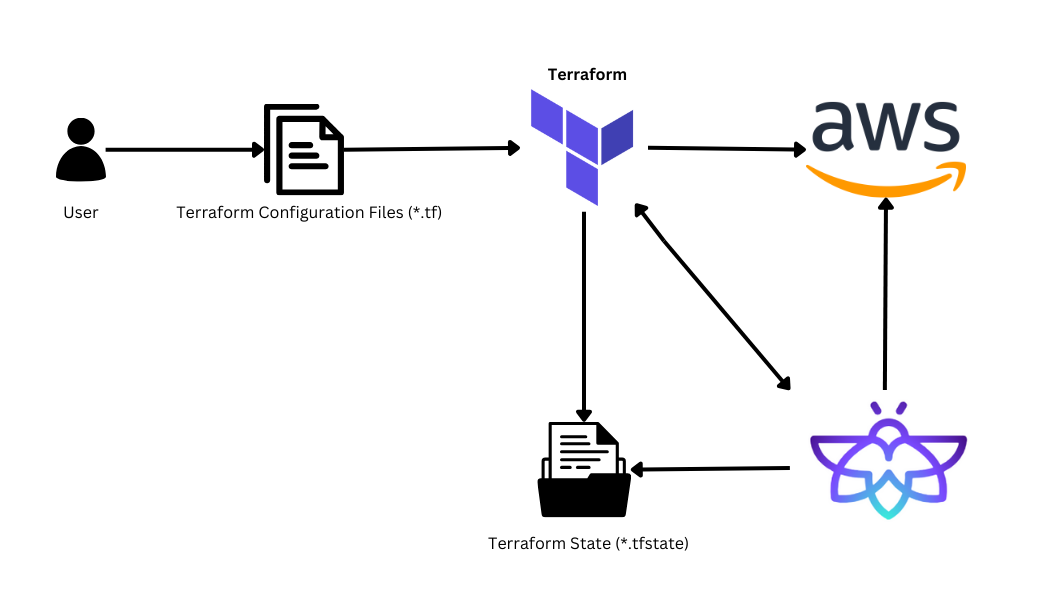


Terraform follows a structured workflow:
1. Write Configuration
Infrastructure is defined in .tf files.
Example:
provider "aws" {
  region = "ap-south-1"
}

resource "aws_instance" "example" {
  ami           = "ami-123456"
  instance_type = "t2.micro"
}
2. Initialize
terraform init
Downloads provider plugins.
3. Plan
terraform plan
Shows execution plan before applying changes.
4. Apply
terraform apply
Creates or modifies infrastructure.
5. State Management
Terraform maintains a state file that tracks infrastructure mapping.
Core Components of Terraform
1. Providers
Providers allow Terraform to interact with APIs.
Popular providers include:
- Amazon Web Services
- Microsoft Azure
- Google Cloud
- Kubernetes
2. Resources
Resources define infrastructure objects such as:
- Virtual machines
- Storage buckets
- VPCs
- Load balancers
3. Modules
Reusable building blocks for standardized architecture.
4. State File
Tracks current deployed infrastructure. Stored locally or remotely.
Terraform in Multi Cloud Strategy
One of Terraform’s biggest strengths is multi cloud support.
Instead of learning separate tools like:
- AWS CloudFormation
- Azure Resource Manager
Terraform provides a unified configuration language across platforms.
This reduces skill fragmentation and simplifies governance.
Enterprise Use Cases
1. Automated Environment Provisioning
Dev, QA, Staging, and Production environments can be created using the same module.
2. Kubernetes Infrastructure Automation
Automating clusters on AWS EKS, Azure AKS, or GKE.
3. Disaster Recovery Setup
Reprovision entire regions from code.
4. Network Infrastructure
Provisioning VPCs, subnets, gateways, firewall rules.
5. AI and Data Platforms
Automating GPU clusters and data pipelines for ML workloads.
Terraform vs CloudFormation
| Feature | Terraform | CloudFormation |
|---|---|---|
| Multi cloud | Yes | No |
| Language | HCL | JSON / YAML |
| Ecosystem | Large provider ecosystem | AWS only |
| Community modules | Extensive | Limited to AWS |
Terraform is preferred in hybrid and multi cloud architectures.
Advantages of Terraform
- Declarative approach
- Large provider ecosystem
- Strong community support
- Modular design
- CI CD integration
- Cloud agnostic
Limitations
- State file complexity
- Learning curve for modules
- Dependency management challenges
- Enterprise licensing considerations
Terraform with CI CD
Terraform integrates with:
- GitHub
- GitLab
- Jenkins
Typical workflow:
- Commit Terraform code
- Automated plan validation
- Approval gate
- Apply deployment
This ensures infrastructure governance and compliance.
Security Best Practices
- Remote state storage with encryption
- Role based access control
- Policy as Code using Sentinel
- Secrets management integration
Terraform can integrate with tools like Vault for secure secret injection.
Real World Enterprise Example
A large financial organization migrating to multi cloud uses Terraform to:
- Standardize VPC architecture
- Automate Kubernetes cluster provisioning
- Enforce tagging policies
- Replicate DR environments in secondary region
Result:
- 60 percent faster environment provisioning
- 40 percent reduction in manual configuration errors
- Improved audit traceability
Future of Terraform in 2026
Key trends:
- AI assisted Terraform code generation
- Drift detection automation
- Policy enforcement automation
- Deeper Kubernetes integration
- OpenTofu ecosystem growth
As enterprises adopt platform engineering models, Terraform remains foundational.
Conclusion
Terraform as an IaC tool is no longer optional for serious cloud organizations. It enables automation, consistency, scalability, and governance across complex infrastructures.
For enterprises operating multi cloud or hybrid architectures, Terraform provides a standardized and scalable automation framework that aligns with DevOps and Cloud Native best practices.
SALSA, SBOM and Cloud Security: The Complete Enterprise Guide to Software Supply Chain Protection