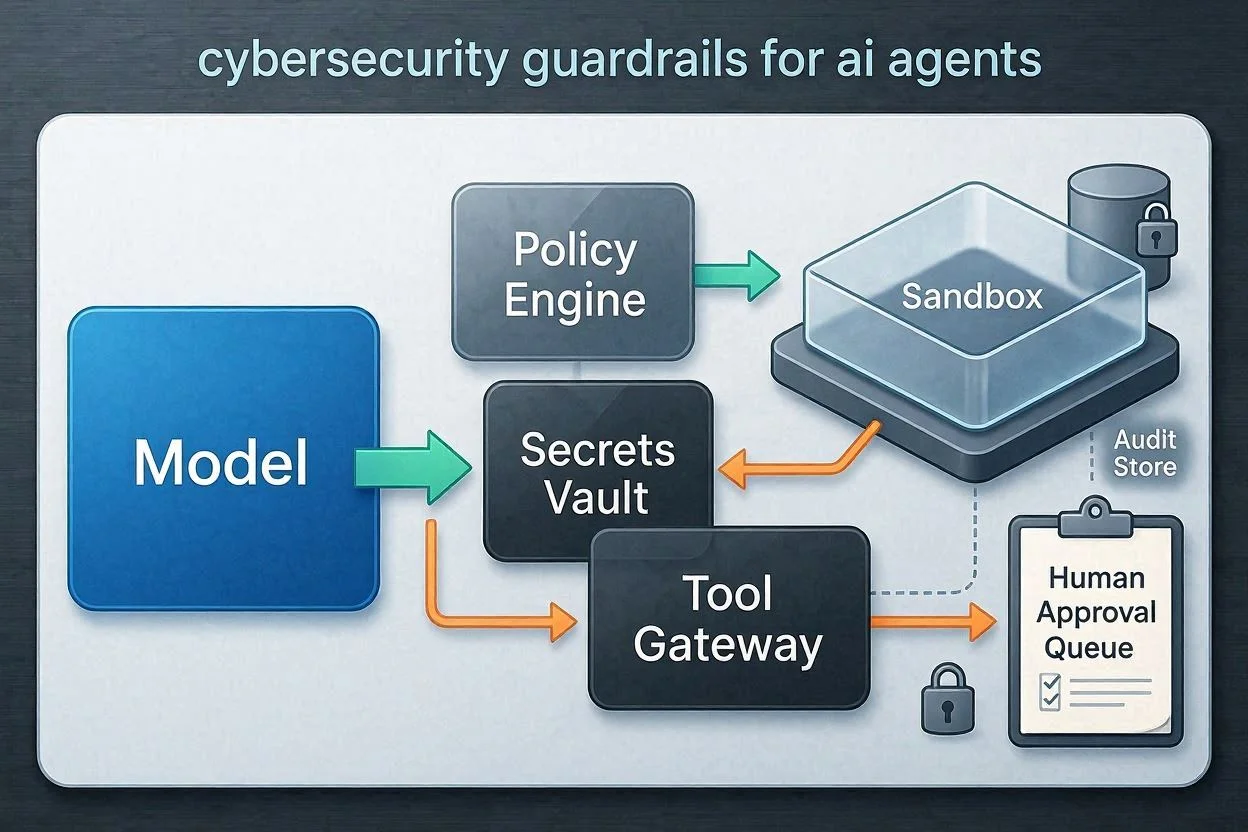
The DevOps landscape is undergoing a revolutionary transformation as artificial intelligence and machine learning reshape how organizations build, deploy, and maintain software systems. In 2025, AI-driven DevOps—often called AIOps—has evolved from an experimental concept into a strategic imperative, with the market projected to grow at 26% CAGR and reach $72.81 billion by 2032. This explosive growth reflects a fundamental shift: organizations are moving from reactive, manual operations to proactive, intelligent automation that anticipates problems before they impact users.
Table of Contents
What is AI-Driven DevOps?
AI-driven DevOps integrates artificial intelligence and machine learning capabilities throughout the entire DevOps lifecycle—from code development and testing to deployment, monitoring, and incident response. Unlike traditional DevOps automation that follows predefined rules, AI-powered systems learn from historical data, recognize patterns, and make intelligent decisions autonomously.
The core difference lies in intelligence. While conventional DevOps automates repetitive tasks through scripts and workflows, AI DevOps leverages machine learning algorithms to analyze vast amounts of telemetry data, predict system behavior, and continuously optimize operations without human intervention.
Key Applications of AI in DevOps
Intelligent Anomaly Detection
AI-powered anomaly detection represents one of the most transformative applications in modern DevOps. Machine learning models analyze historical system metrics—CPU utilization, memory consumption, network latency, and application response times—to establish baseline behavioral patterns. When deviations occur, AI algorithms distinguish between normal fluctuations and genuine anomalies that signal potential failures.
IBM’s Watson AIOps implementation demonstrates this capability in action. By leveraging natural language processing and machine learning, the system filters alerts, correlates events across distributed systems, and recommends remediation actions. The results speak volumes: IBM achieved a 30% reduction in mean time to resolution (MTTR) and significantly improved system reliability.
Traditional threshold-based monitoring generates excessive false positives, creating alert fatigue that overwhelms operations teams. AI transforms this reactive approach into a predictive one, catching problems early and reducing alert noise by up to 85%.
Predictive Analytics and Proactive Maintenance
Predictive analytics shifts DevOps from firefighting mode to preventative care. Machine learning models trained on time-series data forecast system performance, predict resource exhaustion, and identify degradation patterns before they escalate into outages.
A global e-commerce company integrated AI-driven predictive analytics into its DevOps pipeline and achieved remarkable results within four months: 35% reduction in deployment errors and 50% increase in release velocity. Developers reported fewer manual rework cycles, freeing them to focus on innovation rather than troubleshooting production incidents.
BlueScope’s implementation of Siemens’s predictive maintenance technology using IoT data exemplifies this trend. The system detects early warning signs of equipment issues, preventing costly downtime and enabling proactive interventions that optimize operational efficiency.
Amazon leverages AI-powered predictive systems through AWS Fault Injection Simulator, which introduces controlled disruptions to test system resilience. This proactive approach helps Amazon predict potential failures and implement safeguards before they impact millions of users.
Self-Healing Systems
Self-healing systems represent the pinnacle of autonomous DevOps operations. These AI-powered platforms automatically discover anomalies—performance bottlenecks, security vulnerabilities, configuration drift—and execute corrective actions without human intervention.
Self-healing infrastructure operates on three core principles: automatic detection through AI-augmented monitoring, automated diagnosis and recovery via predefined remediation workflows, and built-in resilience through redundancy and fault tolerance. When issues arise, the system can automatically restart failing services, reallocate resources, roll back problematic deployments, or scale infrastructure in real-time.
Enterprise implementations of self-healing systems demonstrate compelling ROI. Organizations report reductions in mean time to resolution (MTTR) between 50-85%, with some financial institutions cutting MTTR by 43% and achieving 93% reductions through advanced AIOps platforms. For financial institutions where outages cost over $300,000 per hour, these improvements directly protect service continuity and bottom-line results.
Microsoft implements self-healing capabilities across its Azure cloud infrastructure by analyzing operational data with machine learning models. The system detects early signs of performance degradation and triggers proactive maintenance, minimizing service disruptions for enterprise customers.
Automated CI/CD Pipeline Optimization
AI revolutionizes continuous integration and continuous deployment (CI/CD) pipelines by introducing intelligence at every stage. Graph Neural Networks model complex multi-repository service topologies, enabling sophisticated dependency management and intelligent build prioritization. Machine learning algorithms predict test impact, significantly reducing pipeline failures and accelerating delivery cycles.
A Fortune 500 SaaS organization transformed its traditional reactive CI/CD pipelines into an AI-first predictive deployment governance model. The implementation leveraged time-series analytics for system behavior monitoring and drift detection, coupled with ML algorithms for automated dependency inference and failure pattern recognition. The results included faster deployment cycles, reduced incident triaging time, and improved overall system reliability.
DevOps service providers integrate predictive functionality into CI/CD tools, guaranteeing resilient and robust systems. These AI-powered platforms identify patterns in previous incidents to suggest remedies automatically, drastically reducing the need for manual operator intervention.
Enhanced Security with AI-Powered DevSecOps
Security integration throughout the development lifecycle—known as DevSecOps—has become paramount in 2025. AI-based platforms weave security directly into CI/CD processes, detecting vulnerabilities early through “shift-left security” practices.
AWS CodeGuru and similar AI-powered tools automatically scan code for OWASP Top Ten vulnerabilities during development. AI-based systems enforce compliance by ensuring pull requests conform to security policies and project management standards before merging. This proactive approach transforms security from an afterthought into an integral development process component, minimizing threats and ensuring regulatory compliance.
AI enhances threat detection speed and reduces false positives in security operations by 50-70%. User and Entity Behavior Analytics (UEBA) powered by machine learning identify anomalous access patterns that indicate potential breaches.
Leading AIOps Platforms Comparison
Datadog
Datadog excels in cloud-native environments, providing real-time monitoring for servers, databases, applications, and infrastructure. The platform offers over 500 integrations, making it highly versatile for diverse technology stacks. Datadog’s strengths include comprehensive data coverage across metrics, logs, traces, real user monitoring (RUM), and synthetic testing.
Key features include AI-powered anomaly detection, intelligent alerting with correlation to reduce noise, and customizable dashboards for full-stack observability. Datadog’s marketplace approach provides broad ecosystem integration, though this flexibility can lead to complexity in configuration.
Pricing: Usage-based model with potential for cost escalation at scale; organizations should implement sampling strategies and retention policies to control ingest costs.
Dynatrace
Dynatrace positions itself as the all-in-one, opinionated AIOps platform. Its Davis AI engine provides deterministic AI-powered root cause analysis, automatically identifying the precise source of performance issues without manual correlation.
The platform’s OneAgent technology uses eBPF (extended Berkeley Packet Filter) for automatic instrumentation with minimal performance overhead. This auto-discovery capability maps entire application topologies—including microservices dependencies—without requiring manual configuration.
Dynatrace excels at full-stack monitoring with deep code-level insights, making it ideal for complex enterprise environments. The platform provides unified observability across cloud, hybrid, and on-premises infrastructure.
Pricing: Subscription-based with higher upfront costs but predictable billing; enterprise licensing typically includes comprehensive features.
New Relic
New Relic emphasizes application performance monitoring with detailed transaction traces, making it easier to pinpoint bottlenecks in application lifecycles. The platform focuses closely on user transactions, offering insights into response times, error rates, and throughput.
New Relic’s AIOps solutions feature robust incident management software with real-time monitoring, automated notifications, and flexible workflows. The platform’s integrated data platform consolidates telemetry data from entire software ecosystems, providing powerful full-stack analysis capabilities.
Strong OpenTelemetry (OTel) support makes New Relic particularly attractive for organizations committed to vendor-neutral instrumentation. Users can leverage OTel pipelines while maintaining flexibility to integrate data visualization layers like Grafana.youtube
Pricing: Flexible usage-based pricing with strong controls to prevent bill shock; often more cost-effective than competitors for similar workloads.
Platform Selection Criteria
Choosing the right AIOps platform depends on several factors:
- Organizational maturity: Dynatrace suits enterprises seeking comprehensive, opinionated solutions; Datadog appeals to teams wanting flexibility and extensive integrations; New Relic works well for cost-conscious organizations prioritizing OTel compatibility
- Technology stack: Cloud-native Kubernetes environments benefit from all three platforms, though implementation approaches differ
- Cost considerations: New Relic typically offers the most predictable pricing; Datadog requires careful monitoring of ingest rates; Dynatrace provides enterprise predictability at premium pricing
- Team expertise: Dynatrace minimizes configuration complexity through automation; Datadog and New Relic offer more control but require deeper technical expertise
Resource Optimization and Cost Efficiency
AI powers unprecedented cost efficiency in DevOps by optimizing resource utilization through predictive analytics. Machine learning software predicts system demand patterns and automatically scales infrastructure, reducing idle resources and cloud expenditures.
Deloitte’s DevOps teams employed AI-driven optimization to achieve a 31% reduction in cloud spending by rightsizing virtual machines and consolidating storage. Organizations implementing AIOps report infrastructure cost savings between 20-30% by eliminating waste and optimizing resource allocation.
Sify Technologies leveraged AI-powered optimization to cut data center energy costs by up to 10%. These savings result from intelligent workload distribution, automated capacity planning, and elimination of overprovisioned resources.
CloudFabrix, recognized as an AIOps leader by Enterprise Management Associates, emphasizes accurate budgeting through data-driven forecasts. Predictive capacity planning transforms IT spending from reactive guesswork into precise, proactive strategy, ensuring organizations have exactly the resources needed at optimal times.
Real-World Case Studies
IBM: Watson AIOps for Incident Management
IBM implemented Watson AIOps to enhance internal DevOps operations by automating incident triage and root cause analysis. The system leverages machine learning and natural language processing to filter alerts, correlate events across distributed systems, and recommend remediation actions.
Results:
- 30% reduction in mean time to resolution (MTTR)
- Improved system reliability through faster incident response
- Reduced alert fatigue by prioritizing critical events
NavyaCloudOps: Predictive Analytics for Self-Healing
NavyaCloudOps integrated predictive analytics into its DevOps platform to prevent outages and support self-healing pipelines. The system uses time-series models to detect metric deviations and automatically trigger remediation actions—container restarts, capacity adjustments, load rebalancing.
Results:
- Noticeable reduction in downtime incidents
- Smoother CI/CD workflows with fewer manual interventions
- Proactive issue resolution before user impact
Global E-Commerce: AI-Driven Testing and Release Automation
A global e-commerce company integrated AI-driven testing and release automation across its DevOps pipeline. Within four months, the implementation delivered measurable improvements in deployment quality and velocity.
Results:
- 35% reduction in deployment errors
- 50% increase in release velocity
- Freed developers from manual rework to focus on feature innovation
Enterprise SaaS: Predictive CI/CD Governance
A Fortune 500 SaaS organization transformed its traditional CI/CD approach into an AI-first predictive deployment governance model. The architecture leveraged Graph Neural Networks for service topology modeling, enabling sophisticated dependency management and intelligent build prioritization.
Results:
- Reduced pipeline failures through predictive test impact analysis
- Faster mean time to recovery through automated failure pattern recognition
- Improved dependency inference and automated incident triaging
Implementation Best Practices
Start with Strong Observability Foundations
Self-healing infrastructure and AI-driven automation require comprehensive observability as a prerequisite. Organizations must establish continuous, AI-augmented monitoring that captures metrics, logs, traces, and events across the entire technology stack.
Implement distributed tracing to understand transaction flows across microservices, structured logging for efficient analysis, and metrics collection with appropriate granularity. These observability foundations enable AI algorithms to learn system behavior patterns and identify anomalies effectively.
Adopt Progressive Autonomy
Organizations should follow an evolutionary journey from assisted monitoring to fully autonomous operations. Begin with AI-assisted monitoring that flags anomalies for human review, progress to semi-automated remediation with human approval, and eventually achieve autonomous self-healing for well-understood scenarios.
This progressive approach builds organizational trust, allows teams to validate AI recommendations, and ensures appropriate human oversight for critical systems.
Embed AI in DevOps Culture and CI/CD
Technology alone cannot fulfill the potential of AI-driven DevOps; it must be woven into organizational culture and delivery practices. Leverage Infrastructure as Code (IaC) tools like Terraform and Kubernetes manifests to create version-controlled, testable remediation workflows.
Integrate self-healing capabilities directly into CI/CD pipelines, enabling teams to test automated recovery procedures before production deployment. This cultural integration speeds recovery times and nurtures a proactive mindset around reliability.
Focus on Security Integration
Security must be integrated throughout the AI DevOps lifecycle, not bolted on afterward. Implement shift-left security practices that identify vulnerabilities during development, automate security scanning in CI/CD pipelines, and leverage AI for threat detection and compliance monitoring.
AI-powered security tools can analyze code patterns, detect OWASP vulnerabilities, and enforce compliance policies automatically, transforming security into a continuous, integrated process.
Measure and Demonstrate ROI
Successfully demonstrating AIOps ROI requires establishing baseline metrics before implementation and tracking improvements against benchmarks. Key performance indicators include:
- MTTR reduction: 50-85% improvements commonly reported
- Infrastructure cost savings: 20-30% through optimization
- Incident reduction: 15-45% decrease in high-priority outages
- Deployment velocity: 40-50% faster release cycles
Connect technical improvements directly to business outcomes—reduced downtime costs, improved customer retention, accelerated time-to-market—to build the strongest business case.
Market Growth and Future Trends
The DevOps automation market demonstrates explosive growth, reflecting widespread adoption across industries. Valued at $14.44 billion in 2025, the market is projected to reach $72.81 billion by 2032, growing at a remarkable 26% CAGR.
Key drivers include digital transformation initiatives, widespread cloud computing adoption, demand for faster time-to-market, and shift-left testing approaches. The market growth rate of 7.2% from 2019 to 2033 for DevOps automation software indicates sustained demand for solutions that streamline development, testing, and deployment.
Emerging Trends
AIOps Market Expansion: The AIOps market specifically is growing at 15% year-over-year, driven by enterprise demand for intelligent automation. Organizations recognize that traditional DevOps practices cannot scale to manage the complexity of modern cloud-native, microservices-based architectures.
AI-Powered Autonomous Operations: The vision of fully autonomous clouds—termed “AgentOps”—is becoming reality. AI agents will manage operational tasks throughout the entire incident lifecycle, from detection and diagnosis to remediation and post-incident analysis.
Generative AI Integration: Large Language Models (LLMs) are revolutionizing AIOps by enabling natural language interaction with DevOps systems. LLM-powered interfaces allow operators to query system status, request analysis, and initiate remediation using conversational commands.
Platform Engineering: Organizations are moving toward platform engineering models that abstract infrastructure complexity and provide self-service capabilities for development teams. AI-powered platforms enable developers to provision resources, deploy applications, and monitor performance without deep infrastructure expertise.
Challenges and Considerations
Data Dependency and Model Training
AI systems require substantial historical data to train accurate models. Organizations with limited operational history or those undergoing significant architectural changes may struggle to provide sufficient training data.
Address this challenge by starting with narrow, well-defined use cases where historical data exists, gradually expanding AI capabilities as more data accumulates.
Integration Complexity
Integrating AI-powered tools into existing IT ecosystems presents technical and organizational challenges. Legacy systems may lack the instrumentation needed for comprehensive observability, and teams may resist automation that threatens established workflows.
Adopt cloud-native approaches and leverage standard protocols like OpenTelemetry to simplify integration. Invest in change management and training to build organizational buy-in.
Trust and Explainability
Autonomous systems making critical decisions without human oversight raise concerns about transparency and accountability. Black-box AI models that cannot explain their reasoning undermine operator confidence.
Prioritize explainable AI techniques that provide clear justification for automated actions. Implement robust monitoring of AI system performance and maintain human oversight for critical decisions.
Cost of Implementation
High initial investment costs for implementing AIOps platforms can deter adoption, particularly for small and medium enterprises. Organizations must consider licensing fees, infrastructure requirements, and the need for skilled professionals to manage complex systems.
However, long-term benefits—improved efficiency, reduced errors, enhanced security, and substantial cost savings—typically outweigh initial expenses. Most enterprises achieve ROI within 9-14 months of AIOps implementation.
Conclusion
AI-driven DevOps represents a fundamental transformation in how organizations develop, deploy, and operate software systems. The integration of artificial intelligence and machine learning throughout the DevOps lifecycle enables unprecedented levels of automation, efficiency, and reliability.
Organizations implementing AI DevOps achieve measurable results: 30-50% reductions in MTTR, 20-30% infrastructure cost savings, 35-50% improvements in deployment quality and velocity. These improvements translate directly to business outcomes—reduced downtime costs, faster time-to-market, improved customer satisfaction, and enhanced competitive positioning.
The future of DevOps is intelligent, autonomous, and self-healing. As AI agents evolve to manage complete incident lifecycles and generative AI enables natural language interaction with operations systems, the boundary between development and operations will blur further. Organizations that embrace AI-driven DevOps today position themselves to lead in the increasingly automated, intelligent software delivery landscape of tomorrow.
DevOps service providers and consulting firms play crucial roles in guiding enterprises through this transformation, helping them implement platforms like AWS CodeGuru, Datadog, and Dynatrace to optimize pipelines and remain competitive in the rapidly evolving digital landscape.
References:
- https://al-kindipublisher.com/index.php/jcsts/article/view/9228
- https://eajournals.org/ejcsit/vol13-issue18-2025/human-ai-collaboration-in-devops-enhancing-operational-efficiency-with-smart-monitoring/
- https://www.urolime.com/blogs/how-ai-is-transforming-devops-the-top-automation-trends-to-watch-in-2025/
- https://graphite.com/guides/devops-trends-2025-devsecops-aiops
- https://www.coherentmarketinsights.com/industry-reports/devops-automation-tools-market
- https://softjourn.com/insights/how-ai-is-transforming-devops
- https://smartdev.com/ai-use-cases-in-devops/
- https://intelligentvisibility.com/blog/5-aiops-enterprise-use-cases-roi-examples
- https://journalwjaets.com/node/887
- https://hexaviewtech.com/blog/revolutionizing-devops-with-ai-how-machine-learning-is-transforming-automation-and-predictive-analysis
- https://dev.to/yash_sonawane25/devops-made-simple-a-beginners-guide-to-self-healing-systems-in-devops-471e
- https://akava.io/blog/transitioning-to-self-healing-infrastructure-in-devops
- https://eajournals.org/ejcsit/vol13-issue31-2025/predictive-ci-cd-a-case-study-of-ai-driven-deployment-governance-transformation-in-enterprise-saas/
- https://arxiv.org/ftp/arxiv/papers/2404/2404.04839.pdf
- https://www.youtube.com/watch?v=1KJzExbh3Kc
- https://www.graphapp.ai/blog/datadog-vs-new-relic-vs-dynatrace-comprehensive-comparison-guide
- https://newrelic.com/blog/news/cost-comparison-new-relic-vs-datadog-vs-dynatrace
- https://www.dynatrace.com/platform/comparison/
- https://slashdot.org/software/comparison/Datadog-vs-Dynatrace-vs-New-Relic/
- https://www.ijsrset.com/index.php/home/article/view/IJSRSET2512107
- https://www.weetechsolution.com/blog/self-healing-challenges-in-devops
- https://www.datainsightsmarket.com/reports/devops-automation-software-504591
- https://ctomagazine.com/key-devops-trend-2025-to-follow-2/
- https://arxiv.org/pdf/2501.06706.pdf
- https://arxiv.org/abs/2501.06706
- https://arxiv.org/pdf/2501.12461.pdf
- https://ijsrmt.com/index.php/ijsrmt/article/view/980
- https://www.ksolves.com/blog/devops/trends-to-watch
- https://ijgis.org/home/article/view/43
- https://www.linkedin.com/pulse/devops-automation-tool-market-size-set-grow-rapidly-over-kvolc
- https://www.logicmonitor.com/blog/roi-of-agentic-aiops
- https://aws.plainenglish.io/what-devops-roles-look-like-in-2025-with-ai-trends-80d9b4b6a9cb
- https://spacelift.io/blog/ai-devops-tools
- https://journal.undiknas.ac.id/index.php/tiers/article/view/6610
- https://www.ijadis.org/index.php/ijadis/article/view/1419
- https://jutif.if.unsoed.ac.id/index.php/jurnal/article/view/4835
- https://www.irjmets.com/uploadedfiles/paper//issue_2_february_2025/67204/final/fin_irjmets1738773750.pdf
- https://deepscienceresearch.com/dsr/catalog/book/161
- https://ieeexplore.ieee.org/document/11294211/
- https://eajournals.org/ejcsit/vol13-issue12-2025/middleware-automation-and-devops-building-self-healing-intelligent-ecosystems/
- http://arxiv.org/pdf/2206.00225.pdf
- https://www.ijfmr.com/papers/2024/5/28795.pdf
- http://arxiv.org/pdf/2408.03416.pdf
- https://arxiv.org/pdf/2306.00462.pdf
- http://arxiv.org/pdf/2405.11581.pdf
- https://www.linkedin.com/pulse/devops-deadlong-live-ai-2025-transformation-guide-engineers-igyvc
- https://www.qodequay.com/ai-powered-devops-tools-transforming-software-delivery-in-2025
- https://www.cloudthat.com/resources/upcoming-webinar/free-session-how-ai-is-transforming-devops-in-2025/
- https://nareshit.com/blogs/future-of-devops-with-ai-how-artificial-intelligence-is-transforming-the-next-era-of-software-delivery
- https://spiralmantra.com/blog/ai-ml-in-devops-automation/
- https://innowise.com/cases/devops/
- https://blogs.opentext.com/nashville-bound-why-devops-at-opentext-world-2025-is-your-transformation-moment/
- https://ijrar.org/papers/IJRAR24C1522.pdf
- https://www.jisem-journal.com/index.php/journal/article/view/12498
- https://journalwjaets.com/node/460
- https://journalwjaets.com/node/676
- https://ijecs.in/index.php/ijecs/article/view/5139
- https://arxiv.org/pdf/2407.12165.pdf
- https://www.mdpi.com/2078-2489/12/8/308/pdf
- http://arxiv.org/pdf/2101.02534.pdf
- http://arxiv.org/pdf/2401.12405.pdf
- http://arxiv.org/pdf/2405.01545.pdf
- https://arxiv.org/ftp/arxiv/papers/2403/2403.00455.pdf
- https://arxiv.org/pdf/2211.08075.pdf
- https://devops.com/harmonizing-ai-driven-devops-building-secure-self-healing-pipelines-with-aws-bedrock-and-sagemaker/
- https://www.reddit.com/r/devops/comments/l772pw/disadvantages_to_implementing_a/
- https://superagi.com/advanced-self-healing-ai-techniques-for-devops-teams-expert-strategies-for-optimization/
- https://www.infotech.com/research/aiops-roi-calculator
- https://www.linkedin.com/pulse/self-healing-pipeline-how-ai-quietly-revolutionizing-devops-cqnpc
- https://versa-networks.com/documents/AI/AIOps1.pdf
- https://radixweb.com/blog/devops-statistics
- https://devops.com/the-future-of-devops-key-trends-innovations-and-best-practices-in-2025/
- https://docs.broadcom.com/docs/the-total-economic-impact-of-aiops-from-broadcom
- https://www.researchandmarkets.com/report/global-devops-automation-tools-market
- https://ijsrem.com/download/a-self-healing-software-system-using-devops-and-automation/
Top 10 Budget Phones Launching in December 2025 Under ₹25,000